



We’ve been living in a “50-year financial empire built on oil, terrorism, and manufactured crisis,” as Barbara Boyd from Promethean Action says so well.
Peter Navarro, Trump’s senior counselor for trade and manufacturing wrote in The Wall Street Journal last week that Iran-related tensions have added roughly $5 to $15 per barrel to global oil prices. Over a quarter century, that adds up to nearly $10 trillion or the combined annual output of Germany and Japan extracted year after year by Lloyd’s of London, oil speculators and the financial markets. Navarro believes that once the Iran threat is removed, the geopolitical risk premium will collapse and the price of oil will fall below $60 a barrel.
The powerful political, financial and media interests of the City of London/Davos/Globalists benefit from Perpetual War and they seek to push the United States into another Middle Eastern quagmire. This is why the past two weeks have been difficult for MAGA, who voted for Trump’s platform of “No new foreign wars”. Many worry that this is Iraq and Afghanistan all over again but Barbara explains why this is not and how the Empire is disintegrating before our eyes, in favor of a geopolitical philosophy that values commerce, not conflict:
Commerce, not conflict. That is Trump’s actual vision of the Middle East. And it is the direct opposite of the City of London’s vision, which requires permanent conflict to keep the Petrodollar premium running. The Gulf States know this. Saudi Arabia’s Vision 2030 is a plan to transform the Kingdom from raw material extraction into innovation, technology, and advanced energy production.
The UAE already has four operational nuclear reactors at its plant, generating 25% of the country’s electricity. Saudi Arabia is planning 16 reactors. The entire Gulf Cooperation Council is investing in nuclear, solar, hydrogen, and advanced manufacturing.
These nations are not trying to preserve London’s extraction economy. They’re trying to escape it. But Iran’s terrorism makes the region too unstable for the long-term investment that real development requires.
The City of London needs that instability. Stable, productive, sovereign nations investing in nuclear power don’t park their wealth in London real estate and oil futures. They build things. They create things. They join the community of nations moving toward the next stage of human civilization. Trump’s nuclear agreement with Saudi Arabia is part of a broader ambition. 20 nuclear business deals with nations around the world, American technology, American industry, building the energy infrastructure of the next century.
Had the administration given notice of the severity of Iran’s threats prior to the attacks, they may have avoided alienating the base during an election year but it could be that this “poor messaging” is Fifth Generational Warfare and what we’ve been witnessing is strategic deception designed to prevent another “forever war”, as argued by Burning Bright in this great post.
Burning Bright contends that the administration has been intentionally using contradictory public messaging about Iran as a form of narrative warfare. Trump’s conflicting statements to different media outlets (which are still controlled by London) have generated headlines that contradict each other, causing the press and political establishment to amplify mutually incompatible narratives, preventing them from building a coherent war storyline and turning the narrative machinery of the political establishment against itself. Burning Bright believes Trump’s has been giving these actors the appearance of escalation, while quietly steering events toward disengagement.
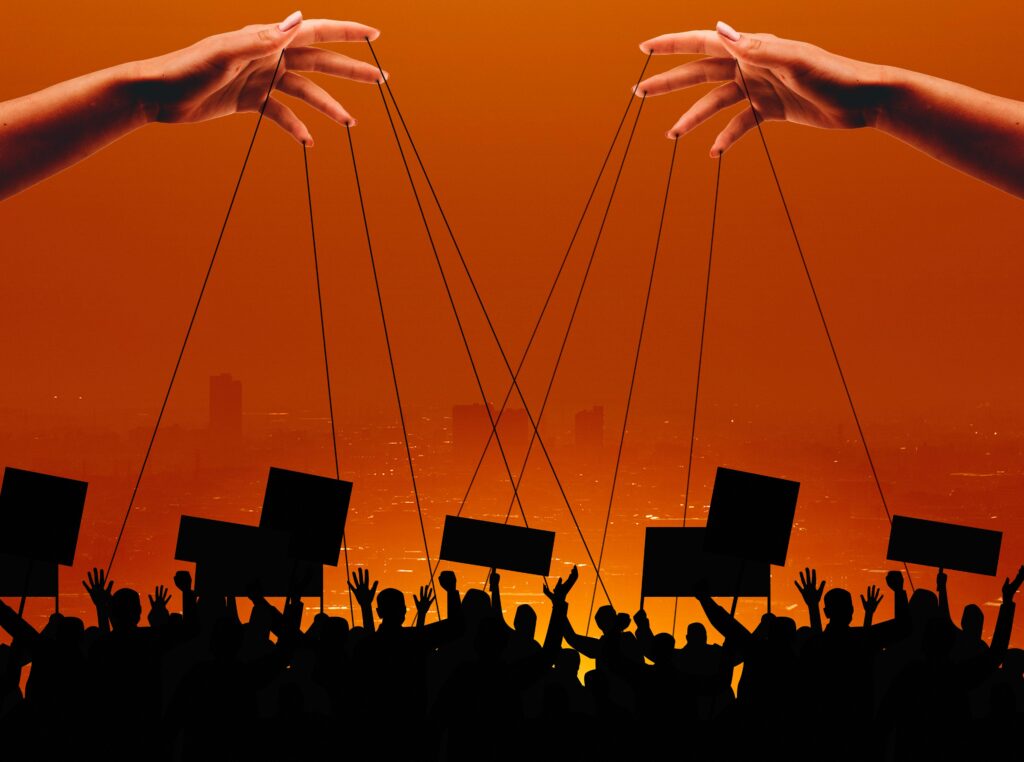
In the West, the main battlefield is not military but cognitive. The real challenge is whether citizens can recognize the manipulation of narratives and withdraw their belief from the scripts that sustain perpetual conflict. If enough people do so, the war-driven political system loses its power to continue the cycle.
Humanity’s victory hinges on our ability to comprehend and engage with a reality that is outside of the familiar narratives of the Empire and on our ability to engage with the emerging reality of a multipolar world order, as described in the Trump administration’s National Security Strategy.
TRANSCRIPT
Barbara Boyd: Last night, President Trump announced that US forces had bombed Kharg Island, the heart of Iran’s oil industry. He said the US destroyed military targets, not infrastructure needed to keep the oil industry running. Here’s his post:
“Moments ago, at my direction, the United States Central Command executed one of the most powerful bombing raids in the history of the Middle East and totally obliterated every military target in Iran’s crown jewel, Karg Island.
“For reasons of decency, I have chosen not to wipe out the oil infrastructure on the island.”
Barbara Boyd: Notice what he didn’t bomb. That’s not instinct, that’s a plan. This morning’s press and social media are full of anonymous sources saying what we’ve heard all week long:
“Trump has no plan. He’s acting on instinct only. Now there will be boots on ground and out-of-control oil prices.”
The Wall Street Journal leads with, “Trump knew the risk of blocking the strafe of Hormuz. He went to war anyway.”
Their article warns of “stagflation, a quagmire, catastrophic economic consequences,” as if Trump didn’t already know them. They’re all wrong.
Trump didn’t start preparing for this war two weeks ago. His ultimate goal – and nobody in the press will discuss it – is the complete demolition of a 50-year financial empire built on oil, terrorism, and manufactured crisis.
The people screaming loudest that America is “losing”, they’re the ones profiting from the old Petrodollar economy that Donald Trump is methodically replacing.
I’m Barbara Boyd, and I’ve tracked the imperial great game for decades, the way financial empires use oil, terrorism, and manufactured crisis to keep sovereign nations on their knees. I know this playbook.
Three things today:
• First, the proof that the President and his team have this under control, as much control as you can ever have in a war.
• Second, how the oil economy extracted $10 trillion through what Trump advisor Peter Navarro calls the “Iran terror premium”.
• And third, the nuclear century that Trump and the Gulf states are already building together.
But before we dig in, please like and share this video. It increases our reach on YouTube.
Let’s start with the “no plan” charge.
Read Trump’s post carefully. He bombed the military targets, not the oil infrastructure. He left the productive capacity intact for the Iranian people to use, once the present regime is gone. That’s what he also did in Venezuela. That’s a doctrine, not an impulse.
Kimberly Strassel, writing in The Wall Street Journal, points out that Trump’s first term created the possibility of finally ending the world’s hostage status to Iran.
He unleashed an oil and natural gas boom and secured the Gulf states’ cooperation through the Abraham Accords, creating the basis for cooperation with Israel and economic development. The oil profiteers responded with Joe Biden and the Green Energy scam, which almost destroyed this country.
But the planning didn’t stop there. Conservative Tree House points out that in August 2025, Trump met Putin in Alaska. Three days later, Russia restarted its Arctic LNG terminals and began loading sanctioned oil onto vessels floating at sea, pre-positioned, waiting, seemingly with no customers.
This week, Treasury Secretary Bessent announced a narrow sanctions relief window. Russian oil already loaded onto vessels as of March 12th and valid through April 11th. Where does that oil go? Largely to India and China. The primary buyers now locked outside the Strait.
And then, the final step: Navy escorts to the Strait and destroying the IRGC’s ability to mine it.
The military targets on Karg Island were essential to Iran’s mine-laying capabilities. Here’s Scott Bessett on Thursday:
(Roll video)
Scott Bessett: That was always in our planning that there’s a chance that US Navy or perhaps an international coalition will be escorting oil tankers through.
There are, in fact, tankers coming through now. Iranian tankers, I believe some Chinese flag tankers have come through. So we know that they have not mined the Straits.
Barbara Boyd: Did you catch that? That was always in our planning. Despite every claim to the contrary, the Strait of Hormuz has not been mined.
There’s plenty of oil, the Strait has not been mined, and the ability to mine it is being eliminated. The Navy is coming in. The real problem is London’s insurance market and speculators on London’s spot market.
Last week, Lloyd’s of London blinked. They are now negotiating with the US Treasury Department after Washington set up its own mechanism for insuring vessels transiting the Strait.
So there is no physical reason for the oil price spike. None.
Next time you see a blogger peddling doom and panic, ask them, what was their position on oil futures last week?
That brings us to the deeper question: Why has Iran been able to run this racket for 40 years and who’s been collecting the profits? That’s next.
But if you’re realizing I’m showing you things nobody else is explaining or talking about, subscribe to Promethean Action’s free newsletter. The link is in the description.
After Richard Nixon destroyed the Bretton Woods monetary system in 1971, Wall Street and the City of London survived and boomed on a single thing: the petrodollar, a system of speculation built on Middle East oil extraction.
London became the center of oil pricing, insurance, and shipping for the entire world. The 1979 Iranian Revolution was a gift to that system, a primitive regime of religious zealots committed to permanent war, whose assets were quietly sheltered in City of London real estate and charities.
Peter Navarro, writing in The Wall Street Journal this week, names what this produced. He called it the “Iran Terror Premium”. Here’s how he describes it:
“Roughly a quarter of the world’s seaborne oil transits the Persian Gulf. When markets price crude oil, they must account for the risk of disruption. Even when no oil is actually blocked, the risk itself pushes prices higher.
“Oil markets behave like insurance markets. The greater the perceived risk, the larger the premium.”
Barbara Boyd: Navarro calculates that Iran-related tensions have added roughly $5 to $15 per barrel to global oil prices under normal conditions. Apply that over a quarter century and the cumulative drain approaches $10 trillion.
The combined annual output of Germany and Japan quietly extracted, year after year, like a parasite. Let that sink in. And who collected that premium? The oil speculators, the financial markets, the City of London.
Navarro’s conclusion? Once the Iran threat is removed, the geopolitical risk premium collapses. “Market equilibrium prices,” he writes, “could fall well below $60 a barrel.”
Think about what that means for every nation on Earth that heats homes, ships goods, and runs industries. But this war isn’t just about ending a 40-year racket. It’s about what comes next. And what comes next is something the Empire absolutely cannot allow.
The panic merchants want you to think this is about revenge or Israel or Neocon Regime Change fantasies. It isn’t.
Look at what Trump was doing in November, before a shot was fired. He was in Riyadh with Crown Prince Mohammed bin Salman, signing a civil nuclear cooperation agreement with Saudi Arabia, the first of its kind. Here’s Secretary Wright.
(Roll video)
Department of Energy Secretary Chris Wright: A historic day today, where the United States and the Kingdom of Saudi Arabia came together on a deal on civil nuclear cooperation, together with bilateral safeguard agreements.
We want to grow our partnership, bring American nuclear technology to Saudi Arabia, and keep our firm commitment to nonproliferation. Huge cooperation. All of this made possible, as President Trump’s broad vision of prosperity at home and peace abroad.
This philosophy, this partnership has transformed the Middle East, where the focus is now on commerce, not conflict.
Barbara Boyd: Commerce, not conflict. That is Trump’s actual vision of the Middle East. And it is the direct opposite of the City of London’s vision, which requires permanent conflict to keep the Petrodollar premium running. The Gulf States know this. Saudi Arabia’s Vision 2030 is a plan to transform the Kingdom from raw material extraction into innovation, technology, and advanced energy production.
The UAE already has four operational nuclear reactors at its plant, generating 25% of the country’s electricity. Saudi Arabia is planning 16 reactors. The entire Gulf Cooperation Council is investing in nuclear, solar, hydrogen, and advanced manufacturing.
These nations are not trying to preserve London’s extraction economy. They’re trying to escape it. But Iran’s terrorism makes the region too unstable for the long-term investment that real development requires.
The City of London needs that instability. Stable, productive, sovereign nations investing in nuclear power don’t park their wealth in London real estate and oil futures. They build things. They create things. They join the community of nations moving toward the next stage of human civilization.
Trump’s nuclear agreement with Saudi Arabia is part of a broader ambition. 20 nuclear business deals with nations around the world, American technology, American industry, building the energy infrastructure of the next century.
So let’s bring this together, because what you’ve heard is not a story about a two-week war with an uncertain ending. It’s a story about a 50-year financial empire that used oil, terrorism, and manufactured fear to drain the world economy of $10 trillion and more, and a president who has been methodically dismantling that for five years.
The energy independence was built. The Russian oil was prepositioned. The Saudi nuclear agreement was signed.
The Abraham Accords laid the foundation. And when the moment came, the military executed against both Iran and its London bankers. Here’s what President Trump told The Washington Post in the early morning hours after the war began:
“I’m not doing this for now. I’m doing it for the future.”
Not for now, for the future. This is what this fight is about, and that is why the Empire is screaming.
If you want to stay ahead of this fight – and you need to, because we’re entering a very hot phase of the war for our Republic – join us at Promethean Action as a supporting member or contributor.
The link is in the description. This has been your Saturday Wrap. Thanks for watching.
Please take a moment and subscribe to our free newsletter at PrometheanAction.com.